Impatience does not always feel like impatience. Sometimes it feels like ambition. Sometimes it feels like responsibility. Sometimes it feels like productivity. You wake up and immediately begin thinking about what needs to be done. You answer a few messages while drinking your coffee. You mentally organize the day while getting dressed. You squeeze something productive into the ten minutes before you have to leave. You listen to something educational in the car because simply driving somewhere feels like an inefficient use of time.
None of this necessarily feels unpleasant. In fact, it can feel pretty good. You are moving, accomplishing things, checking boxes and making progress. But somewhere along the way, productivity can become something else. There is always one more email to answer, one more thing to organize, one more workout to complete, one more project to finish and one more problem to solve. The finish line keeps moving because there was never actually a finish line in the first place. There is simply more, and without realizing it, we can enter into the trance of impatience.
When Productivity Becomes a Trance
A trance is interesting because you usually don't know you are in one while it is happening. You become absorbed in a particular way of seeing the world. Your attention narrows. Certain things become incredibly important while others almost disappear. Impatience can work the same way.
Once we enter the trance, everything begins to feel urgent. The next thing needs to happen quickly so we can get to the thing after it. Walking becomes transportation. Eating becomes refueling. Exercise becomes something to complete. Conversations become interruptions. Driving becomes dead time. Rest becomes something we have to justify. Even enjoyable experiences can become tasks. We begin moving through life with a subtle internal message: Get this done so you can get to what comes next.
The strange part is that what comes next often receives exactly the same treatment. We rush through this to get to that, and then rush through that to get to something else. Eventually, we can spend an entire day preparing to arrive somewhere we never actually reach.
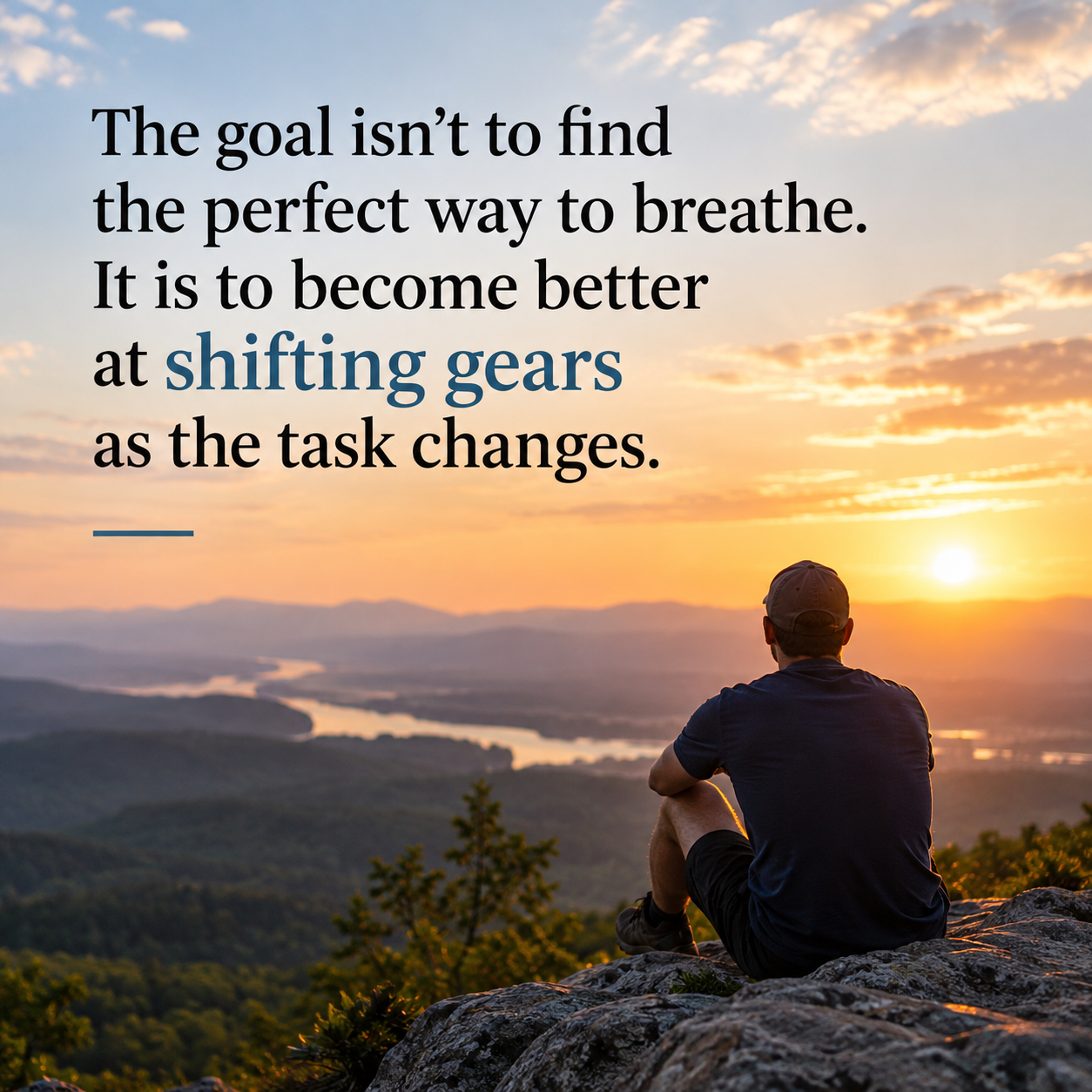
This is one reason impatience can be difficult to recognize. It doesn't necessarily announce itself as anxiety or frustration. It can disguise itself as efficiency, and efficiency is useful. There are absolutely times when moving quickly, organizing our lives and accomplishing a lot is appropriate. The problem is not productivity. The problem is when we lose the ability to switch out of that mode. A gear is useful because there are other gears. If you only have one, eventually it stops being a strategy and becomes your default way of experiencing life.
There Will Always Be More
One of the assumptions underneath chronic impatience is that eventually we will get everything done. We won't, and this isn't pessimistic. It is liberating. There will always be another email, another project, another room that could be cleaned, another workout that could be completed, another book that could be read and another improvement that could be made. Life continuously produces more life.
If our permission to slow down depends on reaching the end of everything that needs to be done, we have created a condition that can never be satisfied. We tell ourselves that we will slow down once we get through this week, once we finish this project or once things settle down. Sometimes things genuinely do settle down, but often the space we create is quickly filled by something else.
Perhaps the problem isn't that we haven't reached the end of our responsibilities. Perhaps the problem is that we believe we need to. Patience begins with a different possibility: Maybe everything does not need to be finished before I am allowed to be okay with what is happening right now. That realization can feel almost rebellious in a culture that constantly reminds us that there is something else we could be doing.
The Switch Can Happen Quickly
We often think that if we have spent hours rushing around, it will take hours to calm down, but human states can change surprisingly quickly. Think about walking into a quiet room after being somewhere loud, stepping outside after sitting in front of a computer for several hours, hearing a song that immediately changes your mood or looking up from your phone and noticing the sky. The circumstances of your life haven't changed, but your relationship with the moment has.
This is important because breaking the trance of impatience does not necessarily require a vacation, a meditation retreat or an empty afternoon. Sometimes it requires thirty seconds. Sometimes it requires two minutes. Sometimes it requires one breath that lasts slightly longer than the breath before it. The objective isn't necessarily to become completely relaxed. It is simply to interrupt the momentum. Once the trance is interrupted, choice returns.
Changing the Sensory Environment
Sound
Sound may be one of the easiest ways to change our internal state because it does not require much effort. Put on different music and notice what happens. Research suggests that music can influence autonomic activity, including heart rate and respiration, and tempo appears to matter. Slower music is often associated with slower breathing and cardiovascular responses, although our personal associations with music matter too. There probably isn't a scientifically perfect song for patience, but sound can provide an external rhythm that our internal rhythms begin to follow.
If you don't know where to start, there are plenty of directions worth exploring. Classical music, jazz, ambient music, nature sounds and slower instrumental music have all been studied in relation to relaxation, stress and physiological arousal. You might also experiment with soundscapes described as theta waves, delta waves, deep-sleep music or meditation music. Think of these less as prescriptions and more as starting points for curiosity. Try something and pay attention to what happens to you. Does your breathing slow? Does your body soften? Do your thoughts feel less hurried? Does the urge to immediately move on to the next thing become a little quieter? Ultimately, the most useful sound is the one that reliably helps you shift gears.
Vision
Vision can do something similar. Much of modern life happens within a few feet of our faces: phones, computers, dashboards and televisions. Our visual world can become remarkably small. Then you walk outside and look at the sky, across a field or toward the horizon. There is something different about looking at something that does not end three feet in front of you.
You don't have to understand the neuroscience of attention to experience this. Allow your gaze to soften. Stop searching for something. Look into the distance without trying to accomplish anything with your eyes. For thirty seconds, let the horizon be enough. As your visual field expands something internally may expand with it. The problem that felt enormous two minutes ago hasn't disappeared; it simply occupies a smaller percentage of the world.
Smell
Smell can create a similar interruption. Coffee, rain, food cooking, a candle, fresh air—the particular smell probably matters less than whether it is pleasant enough that you are willing to stay with it. The goal is simply to notice a smell that you don't immediately want to escape. An unpleasant smell may do the opposite, creating another problem to solve: How do I get away from this? But a smell you enjoy, or even one you find mildly pleasant, can invite you to linger for a few seconds. The important part is not merely that the smell exists. It is that you stop long enough to actually smell it, allowing the experience that is already happening to hold your attention for a moment.
Touch
Touch and physical sensation can bring us back in much the same way. Feel the chair underneath you or notice your feet on the ground. Lie on the floor. Spend two minutes on a foam roller or massage ball, not because you desperately need to fix some tissue, but because pressure gives your attention somewhere to go. Roll around on the ground. Stretch if you want, or don't. Simply feel something, and know you are feeling it. It can be a remarkably effective doorway back into the present.
Breath
Then there is breathing. You are already doing it, which makes it one of the most accessible ways to change gears. You don't need a complicated breathing protocol. Notice one breath and then allow the next one to take a little longer. Perhaps the exhale becomes slower. Perhaps there is a small pause. Perhaps you simply stop trying to breathe efficiently and allow yourself to experience the entire cycle.
Slower breathing can influence the relationship between respiration and the autonomic nervous system, and slow-breathing practices have been associated with greater parasympathetic influence. But you don't have to turn breathing into another performance metric. That would be an impressive way of turning patience back into productivity. You don't need the perfect breathing rate. You just need enough awareness to notice that you are breathing and enough patience to let the breath finish before rushing into the next one.
The Common Ingredient Is Time
Music, distance, smell, touch, movement, stillness and breathing seem like different practices, but they share something important: you have to take the time. That may be exactly why they work. The impatient mind says there isn't enough time, and the act of stopping for thirty seconds directly challenges that assumption.
The impatient mind says you need to keep moving, so you sit down. It says you need to finish something, so you look at the sky. It says you don't have two minutes to waste, so you take the two minutes anyway. Usually, the world doesn't collapse. The emails remain. The work remains. The responsibilities remain. What changes is the urgency surrounding them.
This may be one of the most important realizations in breaking the trance: the feeling of not having enough time and actually not having enough time are two different things. Sometimes we genuinely are under time pressure. There are deadlines, emergencies and circumstances that demand urgency. But there are also countless moments when nothing outside of us is demanding that we rush. The urgency is being generated internally, and because we have been living inside it for so long, it feels like an objective feature of the world.
Practice Breaking the Trance
The more ways you have to interrupt impatience, the easier it becomes to recognize when you are caught in it. Maybe your signal is that you are eating too quickly. Maybe you notice yourself reaching for your phone every time nothing is happening. Maybe you become irritated when someone is telling a story too slowly. These aren't failures. They are useful alarms telling you that you have entered the trance again.
Once you recognize it, you can experiment. Put on the song. Look out the window. Walk outside. Lie on the floor. Smell the coffee. Feel your feet. Take the breath. Give yourself two minutes with absolutely no requirement to improve yourself during those two minutes. The more often you practice making that transition, the more familiar the transition becomes. Eventually, patience doesn't have to be something you wait for. It becomes a state you know how to access.
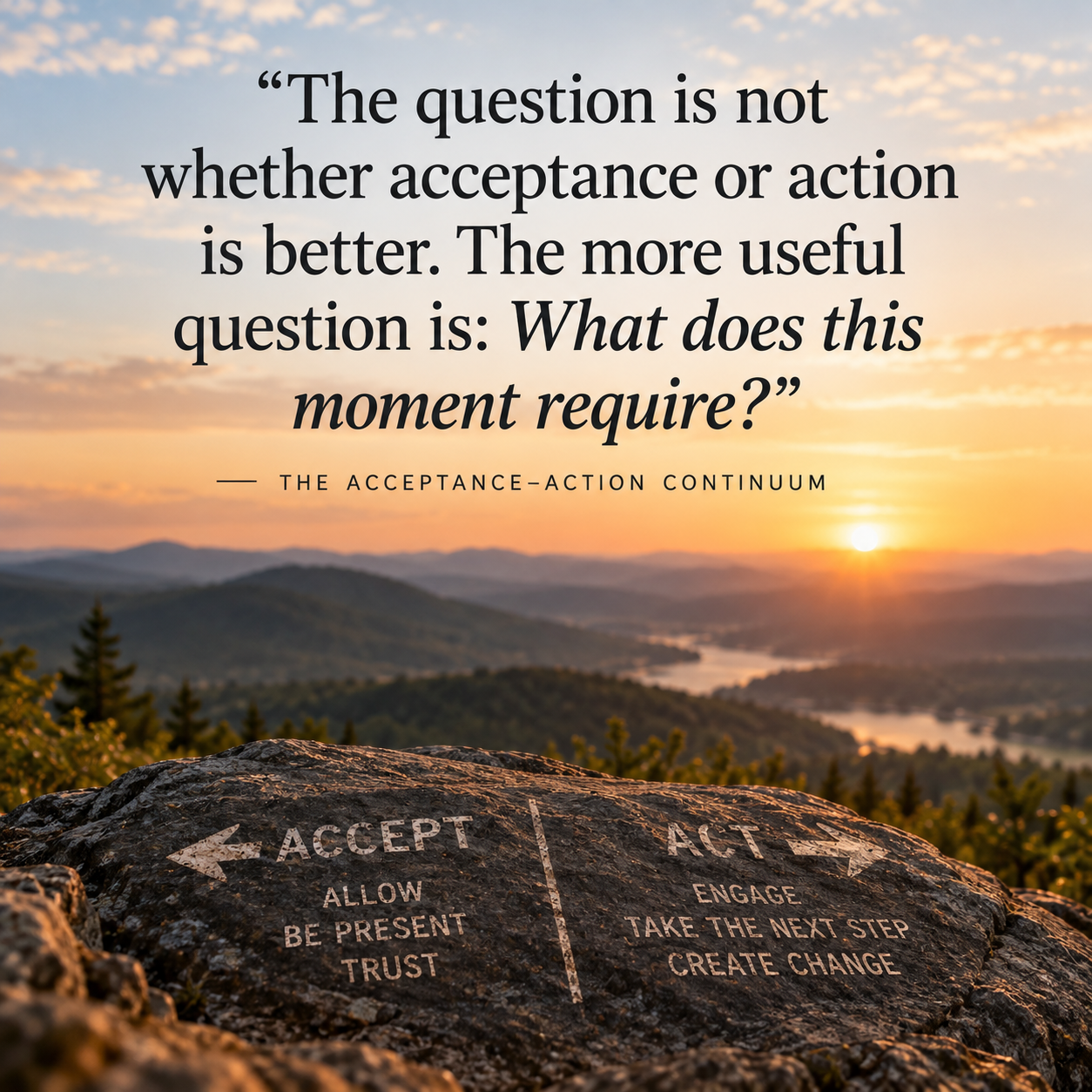
The goal isn't to eliminate impatience. There are times when urgency is appropriate, moments when speed matters and situations where getting things done efficiently is exactly what is required. Productivity is useful, deadlines are real, and sometimes we genuinely have a lot to do. The skill is being able to tell the difference between urgency that comes from our circumstances and urgency that comes from our state of mind. One requires action. The other may simply require waking up.
We Have More Time Than We Think
The trance of impatience tells us that slowing down will cost us something. We will fall behind, waste time or become less productive. But perhaps patience is not the opposite of productivity. Perhaps patience allows productivity to remain a tool instead of becoming a way of life.
There will always be more to do, and that isn't the problem. The problem is believing that life begins when we finally finish doing it. If there is always another task waiting, then waiting until everything is complete before allowing ourselves to be present means we may spend most of our lives waiting for permission that never comes.
Sometimes breaking that illusion requires a major change in perspective, but often it doesn't. You may simply need to put on a song, look in the distance, feel the ground underneath you, stop and smell something you enjoy, lie on the floor or take one mindful breath. You probably don't need as much time as the impatient mind tells you that you do. You just need enough time to break the trance.
Double-click to edit...