The Challenge of Growing Older
One of the greatest challenges of aging is not physical decline.
It’s comparison.
Not comparison to other people, but comparison to ourselves.
The older we get, the more experiences we accumulate. We develop skills, routines, and expertise. We become increasingly certain about who we are and what we're capable of. We learn how to navigate our careers, our relationships, our hobbies, and our daily lives. Over time, competence becomes comfortable.
Then, often gradually and subtly, we begin to notice change.
Tasks that once felt effortless require more attention. Energy fluctuates more than it once did. Recovery takes a little longer. Learning feels a little slower. The body reminds us, in ways both small and large, that time is moving forward.
For many of us, this becomes one of the most difficult aspects of aging. Not because we are incapable. Not because we are unhealthy. But because we are constantly measuring ourselves against previous versions of ourselves.
The irony is that the things we've spent the most time doing are often the places where we notice aging the most. If we've played tennis for decades, we notice that we don't move quite as quickly. If we've exercised consistently for years, we notice that recovery takes longer and progress is harder to find. If we've spent thirty years in the same profession, we become aware of subtle changes in focus, energy, or capacity.
The more familiar we are with something, the more sensitive we become to changes within it.
The very areas where we have developed the greatest expertise often become the areas where we become most aware of decline.
This is where the concept of beginner’s mind becomes so valuable.
In the classic book Zen Mind, Beginner’s Mind, Shunryu Suzuki wrote, “In the beginner’s mind there are many possibilities, but in the expert’s there are few.”
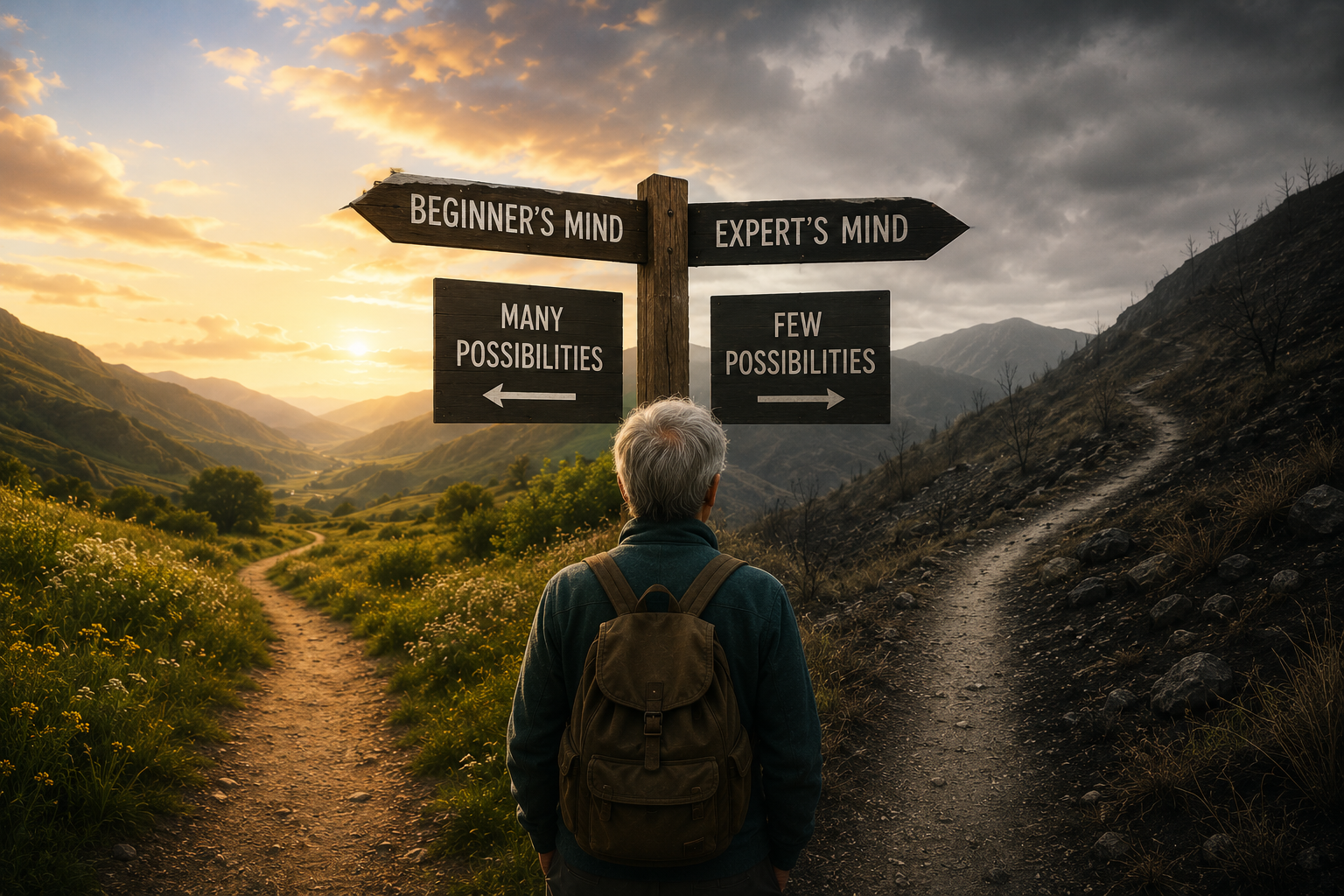
At first glance, the statement sounds backwards. Surely expertise creates possibilities. Surely mastery expands our world.
And it does.
But expertise can also create limitations.
The more we know, the easier it becomes to define ourselves by what we already know. We develop identities around our strengths. We become attached to our competence. Over time, we can become so focused on maintaining what we know that we stop exploring what we don’t.
A beginner has no such burden.
A beginner isn’t comparing today’s performance to a version of themselves from twenty years ago. A beginner isn’t trying to protect a reputation or preserve an identity. A beginner is simply learning.
Everything is discovery.
Everything is progress.
Everything is possibility.
And that is a remarkably powerful place to be.
Why New Things Feel So Good
Many of us associate beginner’s mind with fitness or athletics.
Certainly that counts.
Joining a gym. Learning pickleball. Taking yoga. Trying golf. Beginning a strength-training program.
But beginner’s mind extends far beyond exercise.
It may also mean:
Learning how to use new technology instead of avoiding it.
Taking a painting class.
Learning photography.
Joining a book club.
Learning a language.
Volunteering in a new environment.
Taking music lessons.
Traveling somewhere unfamiliar.
Learning to cook something we've never attempted before.
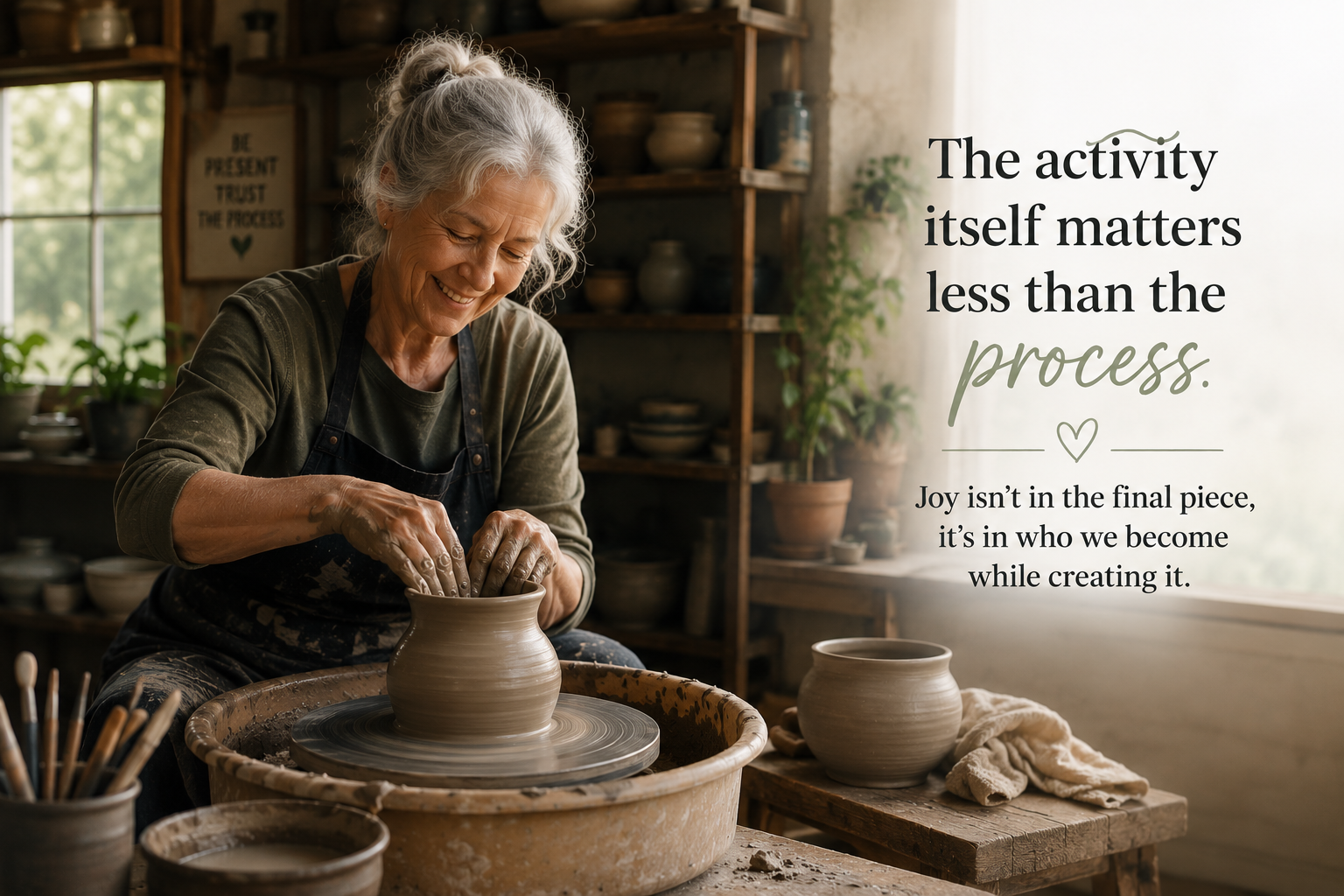
The activity itself matters less than the process.
The value comes from being willing to be new. To be uncertain. To ask questions. To not know.
Something interesting happens when we become beginners. We become present.
When we're doing something we've done ten thousand times, our minds can drift. We operate largely on autopilot. But when we're learning something new, we have to pay attention. We have to observe. We have to listen. We have to engage.
In many ways, beginner’s mind naturally creates mindfulness because the mind has no choice but to stay connected to the experience. It doesn’t yet know what comes next.
The Lesson Hidden in “Newbie” Gains
Anyone who has ever started exercising has experienced some version of what fitness professionals call “newbie gains.”
When we first begin walking, strength training, or paying attention to our health, improvements often come quickly. We have more energy. We feel stronger. We recover better. We notice changes in our mood, confidence, and physical capabilities.
Not because the program is perfect, but because almost any consistent effort creates adaptation when we’re new. Everything feels like progress.
As we become more experienced, progress naturally slows. The gains become smaller. The improvements become harder to notice. The effort required for each step forward becomes greater.
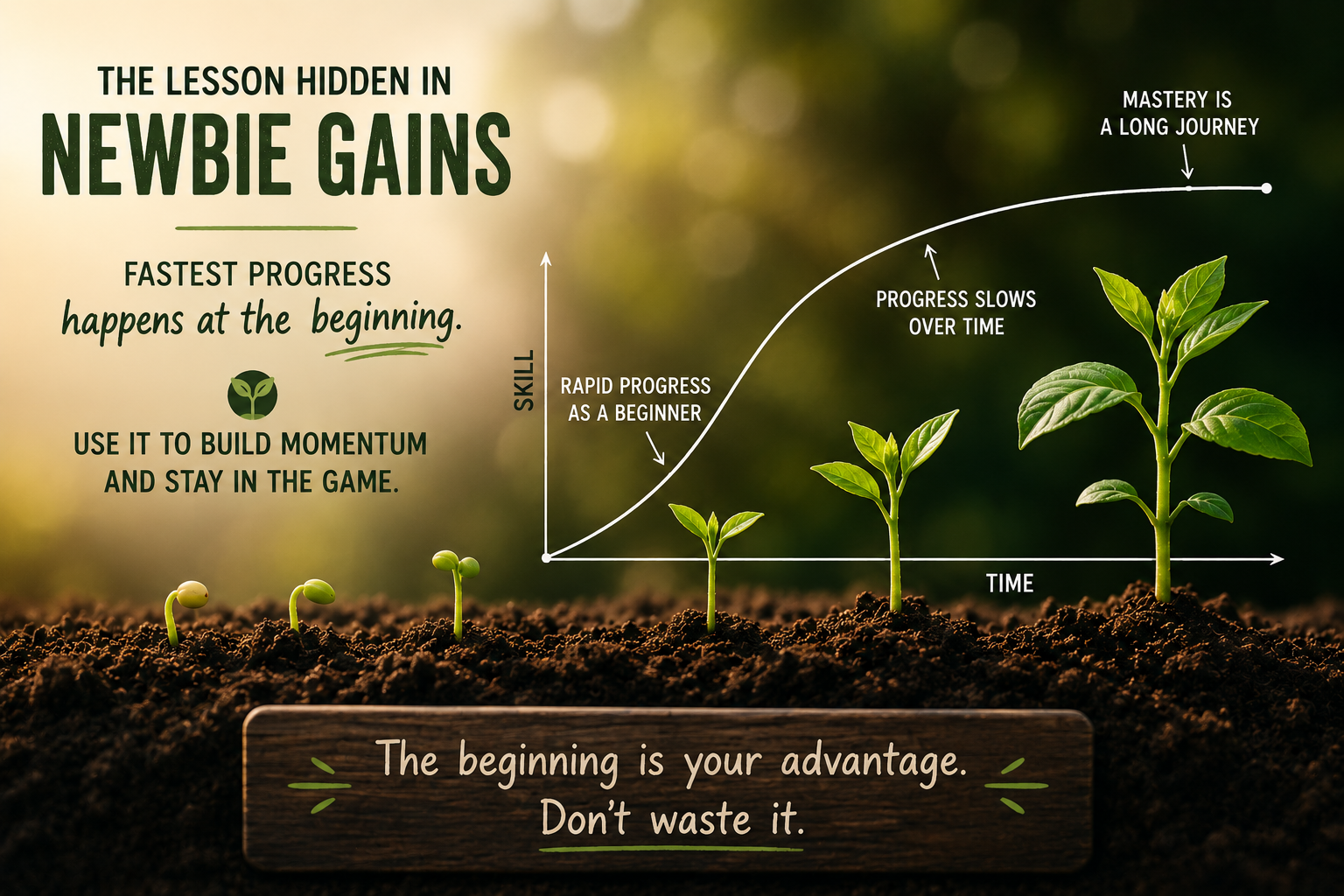
The same thing occurs in nearly every area of life.
Growth becomes more incremental. Improvement becomes harder to measure.
Without new challenges, life can begin to feel like a constant battle against diminishing returns.
This doesn’t mean we should abandon the things we’ve spent years developing. Mastery, experience, and expertise have tremendous value.
But mastery alone may not be enough. Without new endeavors, we lose access to one of the most satisfying experiences available to us: the feeling of getting better.
The feeling of progress. The feeling of possibility. The feeling that tomorrow might reveal something we didn’t know today.
A beginner's mind improves our relationship with growth by putting us in situations where improvement is visible, discoveries are frequent, and learning becomes part of everyday life.
The Hidden Cost of Staying Comfortable
Many of us, gradually and unintentionally, narrow our lives as we age.
We find routines that work and repeat them. We find environments where we're comfortable and stay there. We become increasingly efficient, increasingly specialized, and increasingly predictable.
From one perspective, this makes perfect sense. Life becomes easier, more organized, and more manageable.
But there is a tradeoff.
The very process that makes life feel more stable can also make it less expansive.
As our routines become more predictable, our opportunities for growth often become less frequent. We encounter fewer situations that require us to learn, adapt, or stretch beyond what we already know.
Yet adaptation occurs when we encounter novelty. Growth occurs when we face uncertainty. Resilience develops when we're exposed to situations we haven't yet mastered.
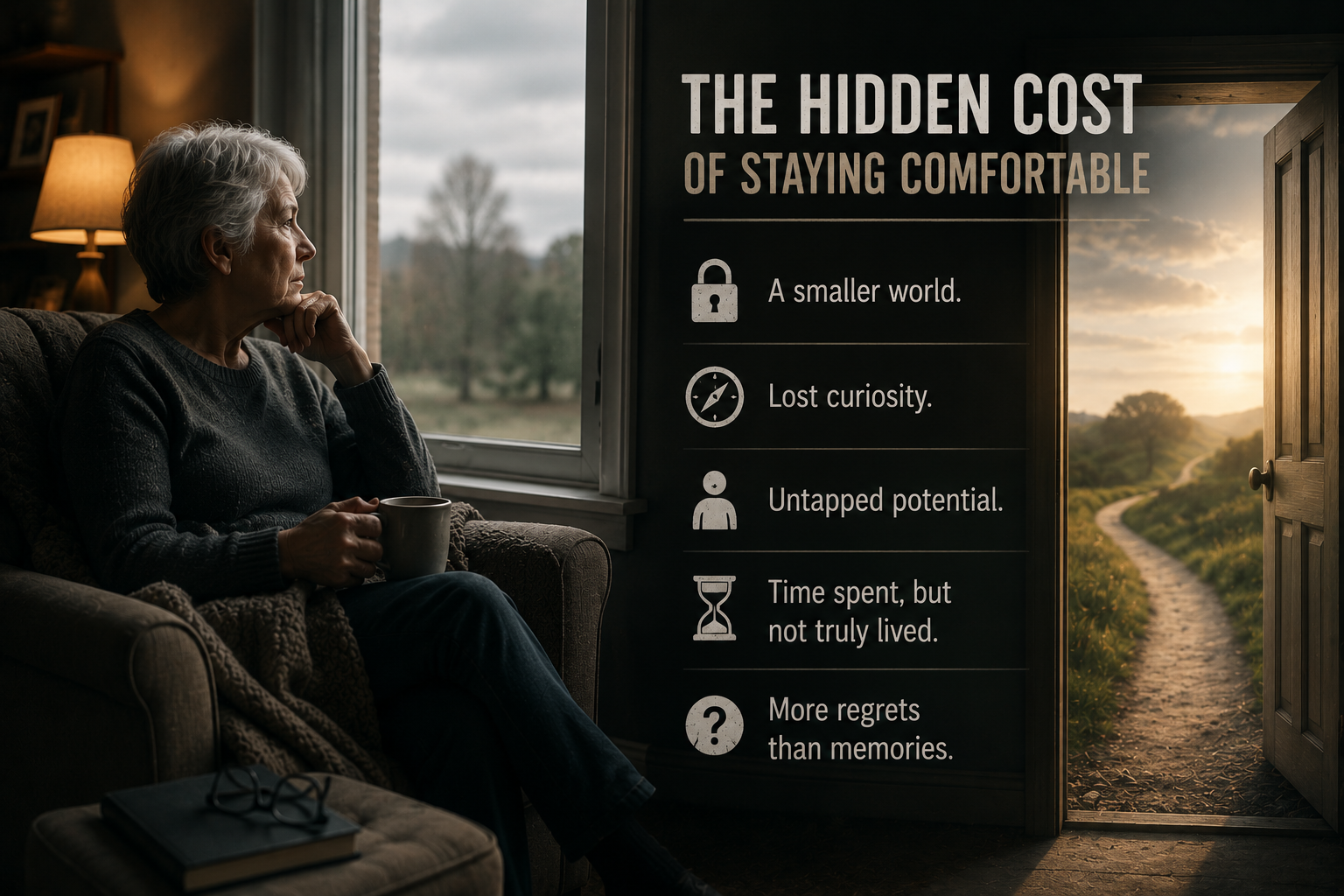
This is why a life built entirely around comfort can gradually feel smaller, even when everything is going well. The absence of challenge removes many of the conditions that allow us to continue developing.
Discomfort is often the doorway to development, not because suffering is inherently valuable, but because discomfort invites curiosity.
When we encounter something unfamiliar, we pay attention. We ask questions. We become interested. We begin exploring possibilities that weren't visible when we stayed within the boundaries of what we already knew.
Curiosity may be one of the most powerful anti-aging qualities we can cultivate. Not because it slows the aging process itself, but because it keeps us learning, adapting, and engaged with life. It reminds us that there is still more to discover, more to understand, and more to become.
Learning How to Start
Of course, beginning something new sounds wonderful in theory. In practice, it can be intimidating.
The older we get, the harder it can feel to be bad at something. Not because our ability to learn has diminished, but because we've accumulated so many points of reference.
Children approach the world differently. They are new to almost everything. They aren't comparing themselves to a previous version of themselves. They aren't trying to maintain an identity or preserve expertise. They don't have decades of experience telling them what they should already know. More often than not, they're driven by curiosity rather than avoidance. They see something unfamiliar and move toward it.
As adults, we've accumulated years of comparison. We know what it feels like to be competent. We know what it feels like to be respected. We know what it feels like to understand what we're doing. As a result, stepping into a situation where we don't know, where we aren't skilled, or where we might look inexperienced can feel uncomfortable.
Most of us don't avoid new things because we lack capability. We avoid them because we dislike feeling inexperienced. We dislike not knowing. We dislike feeling awkward. We dislike being reminded that we are beginners.
The challenge, then, is not finding the courage to become an expert overnight. The challenge is simply finding a way to get started.
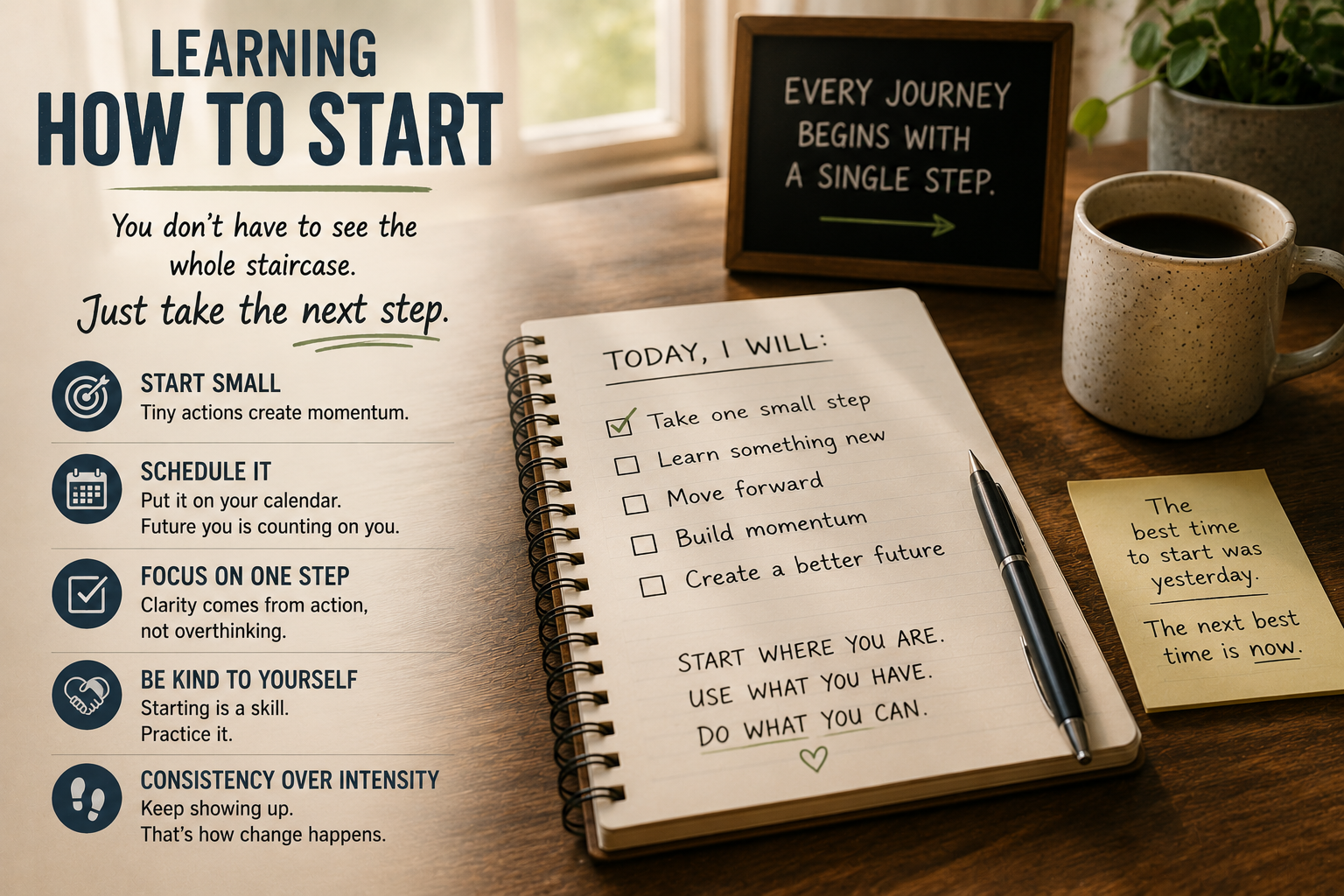
One of the most useful strategies is making the beginning smaller.
We often assume the first step is jumping directly into the deep end, but beginnings can be scaled.
If we want to start exercising but feel intimidated by joining a gym, the first step may simply be walking through the facility and learning where everything is. If we want to start yoga, we can begin with a few online classes in our living room before attending a studio. If we want to learn golf, spending time at a driving range can feel far less intimidating than immediately playing a full round. If we want to start jiu-jitsu, we might watch a class, attend an introductory session, or meet the instructor before stepping onto the mat.
The same principle applies outside of fitness. If we want to join a book club, we can attend as a listener before participating in the discussion. If we want to volunteer, we can commit to a single event before taking on a larger role. If we want to learn a language, we can start with a few minutes a day on an app rather than enrolling in a formal course. If we want to become more social, we can attend one community event rather than committing to an entire season of activities.
The goal isn't to become good.
The goal is to become familiar.
Familiarity reduces fear, and once fear decreases, participation becomes easier.
Many of the people who successfully embrace a beginner's mind aren't necessarily more courageous than the rest of us. They've simply learned how to make beginnings manageable. They understand that getting started is a skill in itself, and like every other skill, it improves with practice.
The Myth of Being Judged
Another obstacle to starting something new is the belief that everyone is watching. Before we walk into a fitness class, attend a community event, join a club, or try a new hobby, it's common to imagine that everyone around us is evaluating us. We worry that we'll be the least experienced person in the room. We worry that our questions will sound foolish. We worry that our lack of skill will somehow be obvious to everyone else.
In reality, most people are far less focused on us than we imagine. They are occupied by their own concerns, insecurities, responsibilities, and challenges. More importantly, they remember what it felt like to be new. They remember the uncertainty of walking into a room where they didn't know anyone, trying an activity they had never done before, or feeling like everyone else had some secret knowledge they didn't possess.
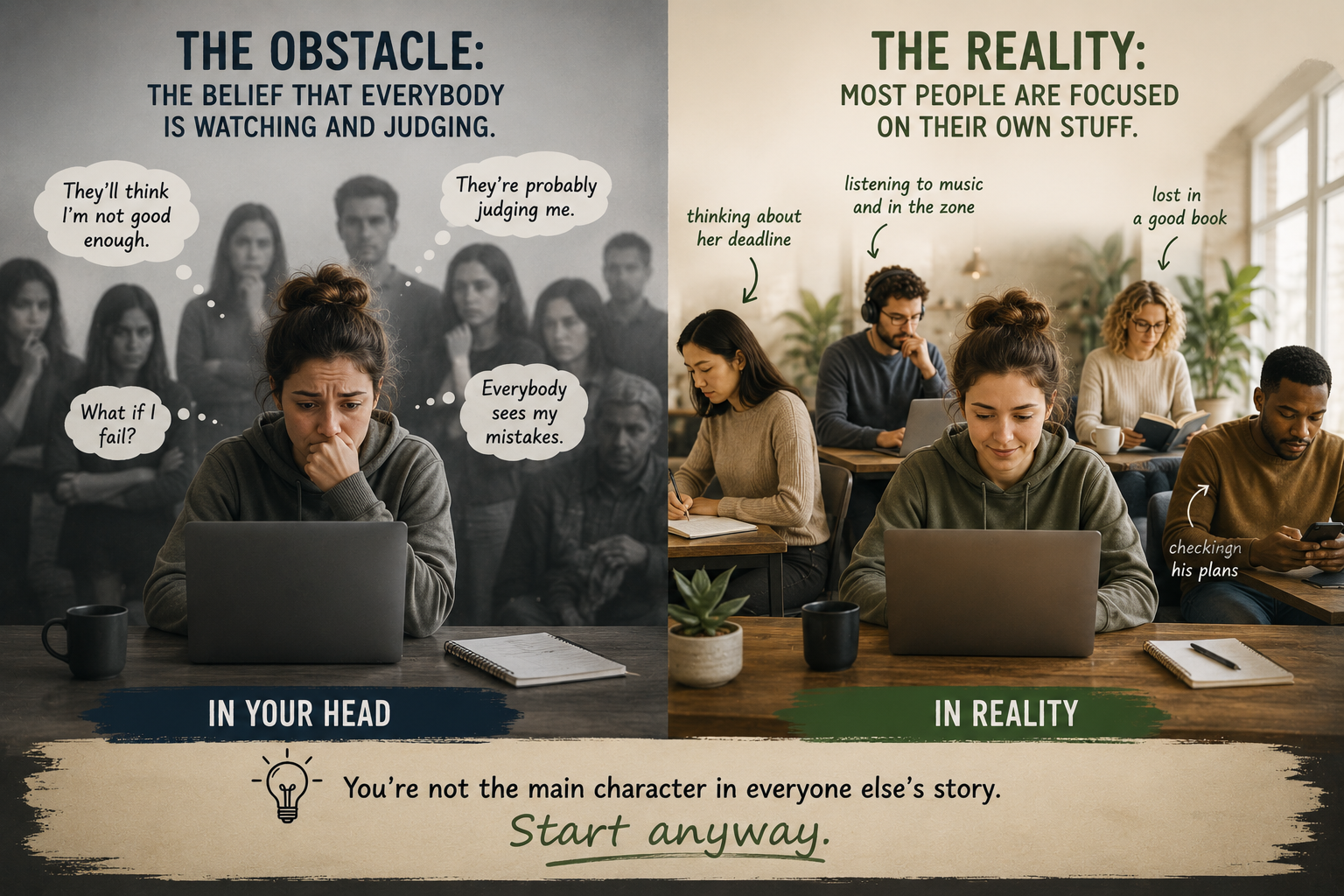
If we have honest conversations, we quickly discover that nearly all of us have spent time feeling uncomfortable and out of place. We remember feeling unsure. We remember not knowing what we were doing. We remember wondering whether we belonged. In fact, many of us continue to experience those feelings far longer than we admit. We simply become better at hiding them.
It's easy to look around and assume that everyone else has it figured out. We see competence on the surface and assume confidence underneath. We see experience and assume certainty. We see someone who appears knowledgeable, talented, accomplished, or successful and conclude that they possess something we don't. Then we get to know them and often discover they're carrying many of the same doubts, fears, and uncertainties that we are.
The farther we go in any pursuit, the more we realize that uncertainty doesn't disappear. The target simply moves. As beginners, we wonder whether we belong. As intermediates, we wonder whether we're progressing quickly enough. As experts, we compare ourselves to people who seem even more accomplished. The feeling changes shape, but it rarely disappears entirely.
For many of us, there is a persistent form of imposter syndrome that follows us throughout life. We continue looking around the room for evidence that someone else is more qualified, more talented, more experienced, or more deserving of being there. What we often fail to realize is that many of those people are doing exactly the same thing. They are comparing themselves to someone else. They are questioning themselves in ways we never see.
Recognizing this can be incredibly freeing. Not because it eliminates self-doubt, but because it changes what self-doubt means. Instead of viewing uncertainty as evidence that we don't belong, we begin to see it as part of the shared human experience of learning, growing, and stretching beyond what is familiar.
When we realize others are navigating similar uncertainties, the process becomes less isolating. The beginner's journey becomes something we share rather than something we endure alone. And in many cases, that shared experience becomes the foundation of friendship, camaraderie, and community. Some of the strongest connections we form in life come not from being experts together, but from being beginners together—learning, struggling, laughing at our mistakes, and gradually growing side by side.
A Different Way to Age
Perhaps the greatest benefit of maintaining a beginner's mind is that it changes our relationship with aging itself.
Without new challenges, aging can gradually begin to feel like a series of comparisons to who we used to be. We notice that certain things take longer. We recognize that some abilities have changed. We become increasingly aware of what doesn't come as easily as it once did. If we're not careful, our attention can become consumed by measuring loss.
A beginner's mind shifts that attention.
When we consistently introduce new opportunities for learning, we create opportunities for growth that are visible. We stop looking exclusively backward and begin looking forward again. Instead of asking, "What can I no longer do?" we begin asking, "What can I learn next?" Instead of measuring ourselves against previous versions of ourselves, we become engaged in the process of becoming something new.
This doesn't erase the realities of aging. Our bodies will change. Certain abilities will diminish. Recovery will take longer. Time remains undefeated. But while some capacities inevitably decline, others remain available for the rest of our lives.
Growth remains available.
Learning remains available.
Curiosity remains available.
And so does wonder.
In many ways, longevity is not simply about extending life. It is about extending our capacity to engage with life. To remain interested in the world around us. To remain curious about what we don't yet know. To remain willing to experience the discomfort that accompanies learning, growth, and discovery.
That engagement doesn't happen automatically.
It requires us to continually place ourselves in situations that invite curiosity and keep us connected to the possibility of growth. Otherwise, without realizing it, we can spend years becoming increasingly expert at a shrinking number of things while simultaneously becoming increasingly aware of what we can no longer do. Our world becomes more predictable, but also smaller. More familiar, but less surprising.
A beginner's mind offers another path.
It invites us to continue learning, not because we need to become experts in everything, but because learning itself keeps us engaged. It reminds us that growth does not belong exclusively to the young. It belongs to anyone willing to remain curious.
Perhaps that is one of the most hopeful truths about aging.
We do not have to choose between growing older and continuing to grow.
As long as we are willing to learn, there will always be something new to discover, some new skill to develop, some new perspective to consider, and some new experience capable of reminding us that life is still unfolding.
Double-click to edit...