Positional Mobility
Core Misconceptions
You can almost guarantee that when dealing with fitness or rehabilitation professionals, you will hear a reference to core training. Another near certainty is that very few people will agree on what it is. In my opinion, there is no aspect of training more important yet more misunderstood. Below, I have laid out the top 3 misconceptions I have encountered in my experience as both a physical therapist and strength and conditioning professional (or movement professional to combine the two). My hope in writing this post is to develop a healthy discussion among other movement professionals regarding your experiences. So please read below, and fire back:

Please FIRE BACK with comments regarding your experiences.
1. Your core is your abs:
It has been well established in scientific literature1,2 that there is no single muscle or group of muscles (as your abdominals are) that make up the core. The core is not a specific anatomical structure at all, but instead, a theoretical functional unit that is task-specific. Research has demonstrated that up to 29 muscles are involved in stabilizing the lumbar spine during isometric exertions alone2. Moreover, current movement theories indicate that core stability is to be broken down into two separate muscular factions: the superficial (global) and deep (local) core. The division of responsibilities of the muscles involved in these two categories are nearly opposite but often need to work together when one performs functional movement. In short, your superficial/global muscles are the muscles farther from the skeleton and those built for short duration/high tension activities such as heavy lifting and carrying. Your deep/local muscles are closest to your spine and responsible for balanced postural positioning during longer duration/low intensity bouts of work, such as sitting, standing, walking, running, etc. Cooperation of these two core systems occur by the deep muscles activating prior to the superficial muscles, during limb or trunk movements.

The muscles of the body work in a chain in order to allow for the pelvis to be held in a neutral position. The idea of the abdominals being the primary core stabilizer is extremely short-sighted
2. There are core-specific exercises:
Initially, this may sound like blasphemy to the movement professional, but let me explain. What I am indicating is that while I don’t believe that there are core-specific exercises, I do believe that nearly all exercises can be considered core training opportunities depending on the quality of the movement performed. Often exercises that are labeled core-specific are simply positional holds of more complex movements or movements that have been simplified to the point where pelvic orientation can be the primary focus. This can be a very skillful practice in the continuum of progressions for more complex movements, but has very little benefit outside of a functional movement context. Using a common example, the prone plank is no more of a core exercise than a push-up. The plank is simply a static hold of the full push-up movement. The push-up itself, when performed properly, is a beautiful display of dynamic core stability. The same idea can be carried over to your favorite movement whether it be pull-ups, deadlifts, or Olympic lifts.
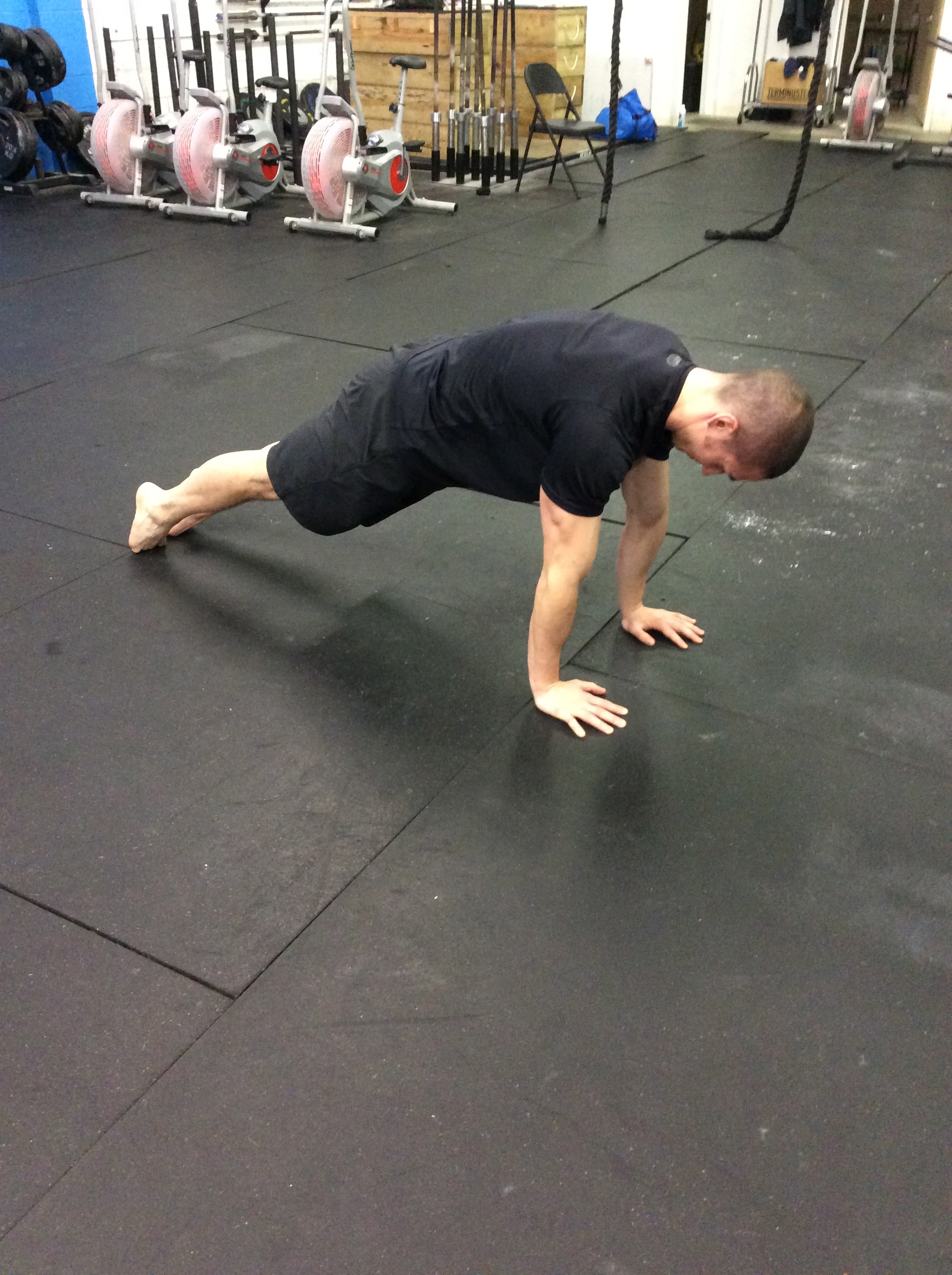
Am I holding a plank or stopping at the top of a push-up?
3. Your core needs strengthening:
As we have identified that the anatomy of the core really isn’t that anatomical but more task-specific, it is helpful to look at core stability as a concept that needs to be taught more than a structure that needs to be built up. When heavy things need to be lifted and carried, tension needs to be created in all muscles involved to better stabilize all the joints involved in the movements executed. To build optimal tension in the muscles a balanced joint orientation needs to be maintained by the deeper stability muscles, and these muscles need to be activated before the onset of superficial muscle activity. In this way, timing and coordination are more important to train than strength. What is often mistaken for core strengthening is simply isometric co-contraction of superficial muscles to generate more force during a particular high-intensity movement.
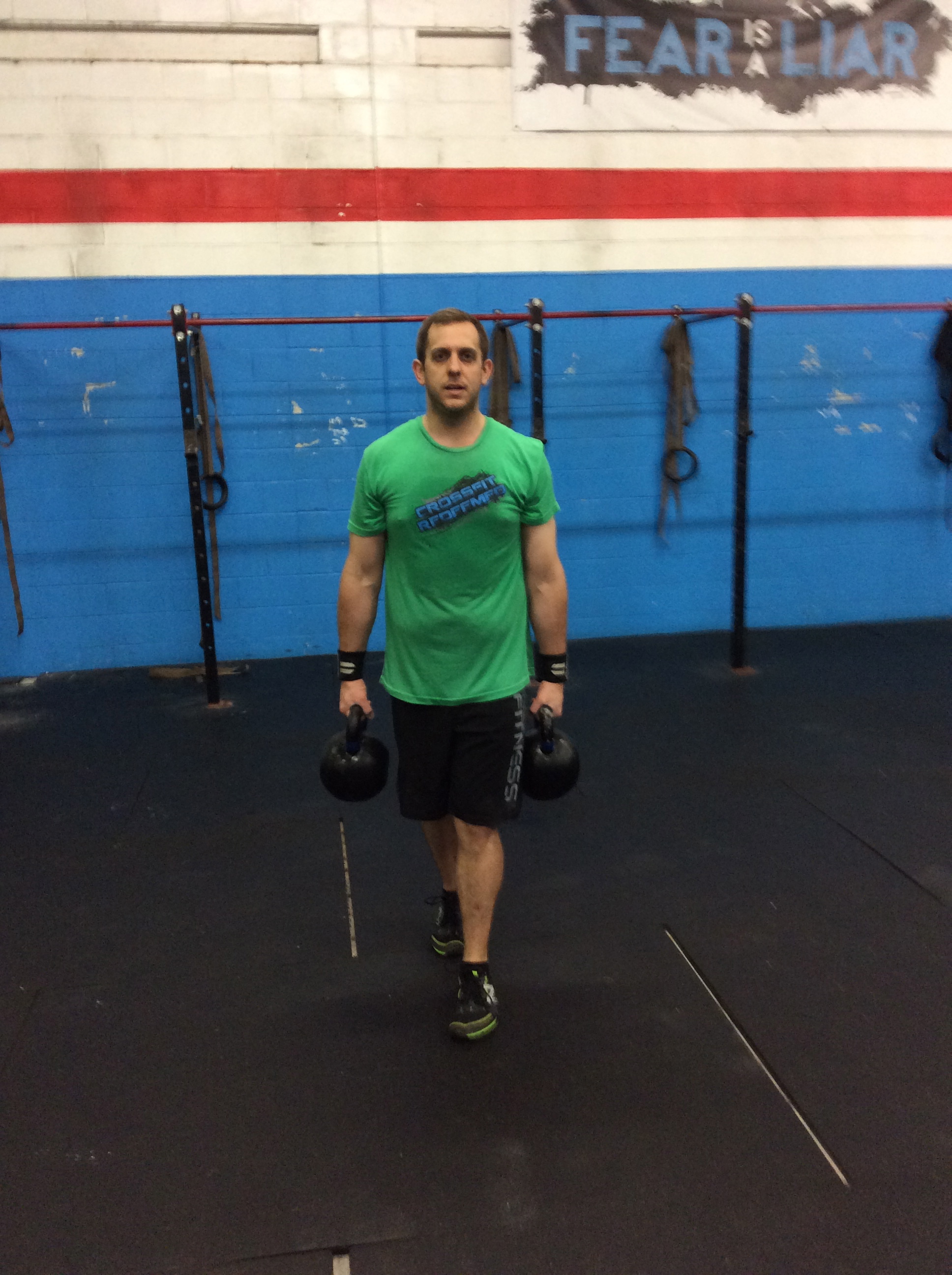
Coordinated tension is needed between deep and superficial muscles, to stabilize the spine during heavy carrying.
When dealing with low-intensity activities, the idea of building tension and strength is actually in opposition to efficient core training. As the activity will need to either be sustained for a long period of time (i.e. sitting in an upright torso position for two hours), or be easily controlled in order to progress to a more challenging activity (i.e. own a single leg stance before throwing a kick), creating the least amount of tension in the body necessary to maintain a balanced posture should be the primary focus. This ability to effortlessly maintain a balanced posture, requires joint and soft tissue mobility to also be balanced throughout the body, making mobility and stability training inseparable. It should be noted that when referring to mobility training, I am not referring to the idea of getting as flexible as possible in as many joints as possible. Mobility, like core stability, is task-specific and must be trained as such. But that is a topic for another post.

A child's ability to easily maintain a squat is an example of the interdependent nature of mobility and stability with longer duration/low-intensity activities.
References:
1. Akuthota, Venu, Andrea Ferreiro, Tamara Moore, and Michael Fredericson. "Core Stability Exercise Principles." Current Sports Medicine Reports: 39-44.
2. Cholewicki, Jacek, and James J. Vanvliet Iv. "Relative Contribution of Trunk Muscles to the Stability of the Lumbar Spine during Isometric Exertions." Clinical Biomechanics: 99-105.
Safe Snow Shoveling
Dynamic Balance/The Ultimate Hip Opener
Movement of the Week: Kettlebell Swing
Mobility Warm-Up
10,000 Swings Safely
MovementProfessional.com: A Discussion About Squat Depth
If You Are Not Squatting Past Parallel, You Are Not Squatting!
I’m sure the title of this post will stir up plenty of controversy, and although that is not necessarily my intention, I do think the topic needs to be discussed, and differences of opinions need to be aired out. I am actually writing this in response to question I got from a friend that routinely squats past parallel and was recently told by a physical therapist assistant to NEVER do so as it will cause damage to the knees. At this point, it is important to define what a squat actually is. Are we talking about back squatting, front squatting, getting up and down from a chair or toilet, a transition in getting up from the ground, giving your toddler a bath, pooping (I’m not too professional to say pooping) into a hole on the ground (had to do it in Croatia), etc. Regardless, the idea is that there is a variety of ways to squat and it is important to understand that at the fundamental level squatting is a position and not an exercise. With this being said, if one cannot get to the bottom of a squat POSITION, it is probably not a good idea to be loading the movement through a partial range with any resistance. In my clinical experience, it is not the act of squatting below parallel that is harmful to the knees but the inability to obtain the bottom position of a full depth squat well that ultimately leads to dysfunction and disability from knee injuries. The ability to obtain the bottom of a squat without compensation such as forward weight shifting, foot/ankle turnout, knees translating inward, spine excessively rounding, and/or the neck overextending, is a wonderful display of mobility and stability that carries over to so many activities of daily living. Once this position is able to be controlled and maintained, why can’t one load the pattern gradually like any other movement in the strength and conditioning world? The problem that I most commonly see is that resistance is added to a squat pattern before one has learned to control the entire movement from top to bottom without resistance.
With all this being said, I am not trying to bash any one individual’s opinion, as I had the same thought process at one time in my career. I did; however, want to use this topic to bring up a bigger point and that is that general rules stating that one should NEVER do something in regards to a movement tend to be easily refuted. Training someone to move better is highly specific to that individual. As a physical therapist and being the husband of a physical therapist assistant, I have had plenty of experience listening to individuals with high levels of education prescribe general limitations to individuals’ movement practices without actually watching them move. Let’s get into the habit of assessing movement before giving advice about movement.
MovementProfessional.com: Chair-Free Office
MovementProfessional.com: Kettlebell Challenge
Published Comment in the Annals of Internal Medicine Regarding Subacromial Impingement
Comments and Responses
Management of the Unilateral Shoulder Impingement Syndrome
TO THE EDITOR: On the surface, Rhon and colleagues’ thoughtful study (1) shows the effectiveness of subacromial corticosteroid injection and manual physical therapy to treat the shoulder impingement syndrome (SIS). However, several factors complicate the comparison of manual physical therapy with medical intervention and perhaps limit this study’s otherwise valuable contribution.
First, the manual therapy approach used in this study was well-described here and elsewhere (2). However, physical therapists in clinical practice typically assess the presence and quality of symptoms in relation to patient movement and position, not according to a pathoanatomical diagnosis such as SIS; therefore including the manual therapy intervention as a treatment for SIS may be misleading. Emphasis should have been placed on the idea that manual therapy is a treatment for the mechanical stresses that may lead to SIS, while a corticosteroid injection has a more direct effect on the structures that have been injured.
Second, manual physical therapists continually reassess and adjust treatment on the basis of the patient’s symptomatic changes structured as a test–retest model (establish a baseline, do an intervention, and then retest to look for change from the baseline). This model has been validated (3) and is the common thread linking many assessment approaches used by all types of physical therapists. This model differs from a physician’s typical assessment and treatment in that therapists spend more time (generally 2 to 3 sessions weekly for at least 4 weeks) observing patients move and their response to various noninvasive interventions.
Third, this study may not have sufficiently emphasized the patient education process. Many musculoskeletal conditions involving the shoulders have high recurrence rates (4), particularly when the mechanism of injury is progressive and thought to result from repetitive overuse of the injured area. In these frequent cases, resolution and recurrence of symptoms may simply be part of the natural history of the condition; short-term pain control and improved functionality would not be the ultimate goal of intervention. Physical therapists educate their patients to become their own “self-assessors” and learn how and when to use appropriate self-treatment techniques as developed through the assessment approach used when deciding on suitable manual techniques.
Finally, corticosteroid injection and manual physical therapy often work in synergy: The former decreases inflammation, and the latter decreases the mechanical stress that may have caused the symptoms in the first place. Including a third group that received both interventions might have allowed for a more clinically relevant comparison.
Christopher Leib, DPT, CSCS, Cert MDT, COMT
Pain Relief and Physical Therapy; Havertown, Pennsylvania
Disclosures: Authors have disclosed no conflicts of interest. Forms can be viewed at www.acponline.org/authors/icmje/ConflictOfInterestForms.do?msNum=L14-0450.
References
1. Rhon DI, Boyles RB, Cleland JA. One-year outcome of subacromial corticosteroid injection compared with manual physical therapy for the management of the unilateral shoulder impingement syndrome: a pragmatic randomized trial. Ann Intern Med. 2014;161:161-9. [PMID: 25089860] doi:10.7326/M13-2199
2. Rhon DI, Boyles RE, Cleland JA, Brown DL. A manual physical therapy approach versus subacromial corticosteroid injection for treatment of shoulder impingement syndrome: a protocol for a randomised clinical trial. BMJ Open. 2011;1:e000137. [PMID: 22021870] doi:10.1136/bmjopen-2011-000137
3. Cook CE, Showalter C, Kabbaz V, O'Halloran B. Can a within/between-session change in pain during reassessment predict outcome using a manual therapy intervention in patients with mechanical low back pain? Man Ther. 2012;17:325-9. [PMID: 22445052] doi:10.1016/j.math.2012.02.020
4. Luime JJ, Koes BW, Miedem HS, Verhaar JA, Burdorf A. High incidence and recurrence of shoulder and neck pain in nursing home employees was demonstrated during a 2-year follow-up. J Clin Epidemiol. 2005;58:407-13. [PMID: 15862727]
Management of the Unilateral Shoulder Impingement Syndrome
TO THE EDITOR: On the surface, Rhon and colleagues’ thoughtful study (1) shows the effectiveness of subacromial corticosteroid injection and manual physical therapy to treat the shoulder impingement syndrome (SIS). However, several factors complicate the comparison of manual physical therapy with medical intervention and perhaps limit this study’s otherwise valuable contribution.
First, the manual therapy approach used in this study was well-described here and elsewhere (2). However, physical therapists in clinical practice typically assess the presence and quality of symptoms in relation to patient movement and position, not according to a pathoanatomical diagnosis such as SIS; therefore including the manual therapy intervention as a treatment for SIS may be misleading. Emphasis should have been placed on the idea that manual therapy is a treatment for the mechanical stresses that may lead to SIS, while a corticosteroid injection has a more direct effect on the structures that have been injured.
Second, manual physical therapists continually reassess and adjust treatment on the basis of the patient’s symptomatic changes structured as a test–retest model (establish a baseline, do an intervention, and then retest to look for change from the baseline). This model has been validated (3) and is the common thread linking many assessment approaches used by all types of physical therapists. This model differs from a physician’s typical assessment and treatment in that therapists spend more time (generally 2 to 3 sessions weekly for at least 4 weeks) observing patients move and their response to various noninvasive interventions.
Third, this study may not have sufficiently emphasized the patient education process. Many musculoskeletal conditions involving the shoulders have high recurrence rates (4), particularly when the mechanism of injury is progressive and thought to result from repetitive overuse of the injured area. In these frequent cases, resolution and recurrence of symptoms may simply be part of the natural history of the condition; short-term pain control and improved functionality would not be the ultimate goal of intervention. Physical therapists educate their patients to become their own “self-assessors” and learn how and when to use appropriate self-treatment techniques as developed through the assessment approach used when deciding on suitable manual techniques.
Finally, corticosteroid injection and manual physical therapy often work in synergy: The former decreases inflammation, and the latter decreases the mechanical stress that may have caused the symptoms in the first place. Including a third group that received both interventions might have allowed for a more clinically relevant comparison.
Christopher Leib, DPT, CSCS, Cert MDT, COMT
Pain Relief and Physical Therapy; Havertown, Pennsylvania
Disclosures: Authors have disclosed no conflicts of interest. Forms can be viewed at www.acponline.org/authors/icmje/ConflictOfInterestForms.do?msNum=L14-0450.
References
1. Rhon DI, Boyles RB, Cleland JA. One-year outcome of subacromial corticosteroid injection compared with manual physical therapy for the management of the unilateral shoulder impingement syndrome: a pragmatic randomized trial. Ann Intern Med. 2014;161:161-9. [PMID: 25089860] doi:10.7326/M13-2199
2. Rhon DI, Boyles RE, Cleland JA, Brown DL. A manual physical therapy approach versus subacromial corticosteroid injection for treatment of shoulder impingement syndrome: a protocol for a randomised clinical trial. BMJ Open. 2011;1:e000137. [PMID: 22021870] doi:10.1136/bmjopen-2011-000137
3. Cook CE, Showalter C, Kabbaz V, O'Halloran B. Can a within/between-session change in pain during reassessment predict outcome using a manual therapy intervention in patients with mechanical low back pain? Man Ther. 2012;17:325-9. [PMID: 22445052] doi:10.1016/j.math.2012.02.020
4. Luime JJ, Koes BW, Miedem HS, Verhaar JA, Burdorf A. High incidence and recurrence of shoulder and neck pain in nursing home employees was demonstrated during a 2-year follow-up. J Clin Epidemiol. 2005;58:407-13. [PMID: 15862727]
MovementProfessional.com: Shoulder Impingement Syndrome
MovementProfessional.com: the Pilates Reformer for Crossfit Movements
Don’t Be an Absolutist!
When it comes to strength and conditioning, fitness and the movement arts, it is not uncommon to find individuals arguing with each other about the BEST practice to rule them all. Whether Crossfit, yoga, Pilates, Zumba, running, triathlon training, etc., it is not difficult to find loyalists that absolutely identify themselves as a practitioner of one method (a Crossfitter, a yogi, a cyclist, a runner, etc.). In my opinion, this mindset is very limiting. No matter how versatile a specific method of training may be, the human body is way too complex not be open-minded to a wide variety of training practices. The concept of finding balance in the body is vast and goes way beyond building physical capacity by training a variety of movements. I will agree that a keystone to a good movement practice should be incorporating a wide variety of movements, therefore, practices such as Crossfit, yoga, and Pilates, have an advantage for optimal movement over single activity movement practices such as running and cycling; however, the idea of variety must be discussed beyond simply what movements are being done and instead be contemplated in regards to the specific focus of the movement based on specific goals. This idea of specificity, is unlikely to be accomplished in a holistic manner with one movement practice. Factors such as intensity, speed, breathing, environment, and competition all play vital roles in how similar movements effect an individual, and many times these factors are in opposition within different practices. For example, many of the movements performed in Crossfit and yoga are very similar in their fundamentals, however, I don’t think many would argue that the environment, intensity, breath focus, and speed of motion are very different. In these instances, it is common to look at the differences in these practices and decide that one practice fits you better than another based on the identity you have created for yourself. In this instance, it may seem sensible to say that yoga is best for me because “I like a low key environment and I do not want to lift weights”, or Crossfit is up my alley because “yoga is for girls, or I thrive in a competitive environment where exercise intensity is a major focus”. My intention here is not to deny that individuals have differences and that some are more suited to certain environments than others, but simply to point out two major factors in this line of thinking:
1. Exclusively training one style of movement, inherently limits you in areas of movement that differ from that particular style. So basically, if you train one element of movement too much an opposite element suffers. In the above example, that means if you are always training at a high intensity, you may find it difficult to down regulate your system, and instead be in a constant state of physical and emotional stress. On the other end of the spectrum, if calming, lower-intensity, body weight movements are the only elements in your practice, your body will not be prepared for tasks where short-duration, high-intensity effort is necessary (i.e. sprinting across the street, lifting furniture, etc.) and injury can often result.
2. Regardless of how individuals label themselves physically, daily life creates obstacles that incorporate a versatility of movement and emotional demands that no single practice can optimally prepare you for. Our bodies work best when our systems (musculoskeletal, nervous, cardiovascular, hormonal, etc) are in balance. That means that elements that you feel most comfortable with, may be the elements that need the LEAST training.
With this in mind, I leave you with this sentiment. Be open-minded in your approach to movement, and you will find you have more potential and versatility than you once thought.
Check out this video demonstration utilizing Pilates-based training to enhance Crossfit-style movements: https://www.youtube.com/watch?v=73ytC877ggg&feature=youtu.be
1. Exclusively training one style of movement, inherently limits you in areas of movement that differ from that particular style. So basically, if you train one element of movement too much an opposite element suffers. In the above example, that means if you are always training at a high intensity, you may find it difficult to down regulate your system, and instead be in a constant state of physical and emotional stress. On the other end of the spectrum, if calming, lower-intensity, body weight movements are the only elements in your practice, your body will not be prepared for tasks where short-duration, high-intensity effort is necessary (i.e. sprinting across the street, lifting furniture, etc.) and injury can often result.
2. Regardless of how individuals label themselves physically, daily life creates obstacles that incorporate a versatility of movement and emotional demands that no single practice can optimally prepare you for. Our bodies work best when our systems (musculoskeletal, nervous, cardiovascular, hormonal, etc) are in balance. That means that elements that you feel most comfortable with, may be the elements that need the LEAST training.
With this in mind, I leave you with this sentiment. Be open-minded in your approach to movement, and you will find you have more potential and versatility than you once thought.
Check out this video demonstration utilizing Pilates-based training to enhance Crossfit-style movements: https://www.youtube.com/watch?v=73ytC877ggg&feature=youtu.be
MovementProfessional.com: MOW: Turkish Get Up w/ Shoe
Are you Really Extending Your Hips?
Powerful hip extension and posterior chain strengthening, are currently all the rage in the strength and conditioning world; and with good reason. There are few things more functional for athletic and daily movement than effective hip extension. Therefore movements such as deadlifts, squats, lunges, bridges, kettlebell swings, etc, should be a staple in any balanced performance and/or function-based exercise regimen . The problem here (and it’s a big one) is subtle differences in how you execute these movements can be the difference between getting the intended benefit improving hip extension capacity or creating dysfunction by further imbalancing your body. The execution in which I am referring deals mostly with the pelvic position maintained during any of these movements. If the pelvis does not maintain (or begin in) a neutral position the hips will not fully extend. Instead the lumbar spine will create the extension to allow one to stand upright, perpetuating an anterior rotation of the pelvis which by definition is a position of over-shortened hips flexors/lumbar extensors, and over-lengthened hip extensors/abdominals. As muscles work best in mid-range when they are neither over-shortened nor over-lengthened, none of these muscle groups are working well in this situation. Furthermore, this lack of muscle balance and control leads to excess joint compression, especially in the areas of the lower lumbar spine (L4-L5; L5-S1) and the anterior (front) knee and hip. This crucial factor, makes it imperative to assess one’s ability to understand and maintain this neutral spine position in all the static positions involved in all the aforementioned movements. These positions include standing, the bottom of a squat, half kneeling or the bottom of a lunge, a hip hinge position (bottom of deadlift or kettlebell swing), etc. You get the idea. Basically the movement needs to be deconstructed to see if pelvic neutrality is able to be achieved and maintained in all static components of the movement being performed. If one is having difficulty finding and maintaining these static positions, there is very little chance that the position will be maintained during high velocity, high load, high volume dynamic movements. Once pelvic neutrality can be mastered with static positioning, a gradual increase in velocity, load, and volume can be added, with the focus still be central to the pelvic position. Sound confusing, see the video below:
https://www.youtube.com/watch?v=4KNnfClUpFg
https://www.youtube.com/watch?v=4KNnfClUpFg